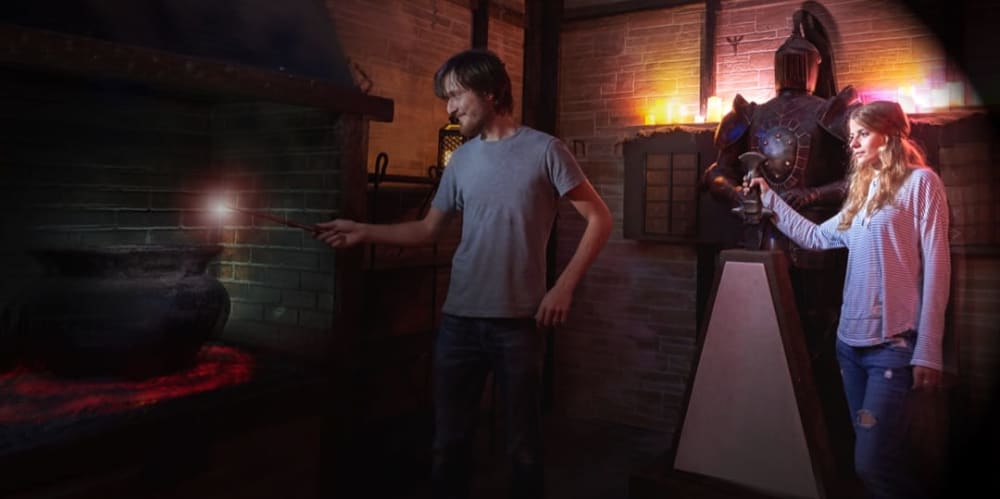
Common Escape Room Mistakes First Time Players Make

The good news is that you do not need special knowledge or previous experience to enjoy an escape room. Successful teams usually rely on communication, observation, organization, and teamwork—not trivia expertise.
Before your next adventure at Boxroom Escape Games in Hollywood, Florida, learn the most common escape room mistakes first-time players make and how to avoid them.
1. Not Communicating What You Find
One of the biggest escape room mistakes is quietly examining a clue without telling the rest of the team. A number, symbol, key, map, or unusual object may not mean much by itself, but another player could already have found the information needed to use it.
Whenever you discover something, announce it clearly:
“I found a key.”
“This paper has four symbols.”
“There is a three-digit lock over here.”
“This object has a red mark on the bottom.”
Speaking up helps the group connect related clues and prevents important discoveries from being forgotten.
First-time player tip: Keep your announcements short and specific so everyone can understand them without stopping what they are doing.
2. Trying to Solve Everything Alone
Escape rooms are designed as team experiences. New players sometimes become attached to a particular puzzle and refuse to move on until they solve it themselves. Meanwhile, a teammate may recognize the pattern immediately.
If you are stuck, explain what you have learned and invite someone else to look at the puzzle. A fresh perspective can reveal a detail you missed. Switching tasks is not giving up—it is effective teamwork.
At Boxroom Escape Games, every player can contribute differently. One person may notice hidden details, another may recognize patterns, and someone else may be great at keeping the group organized.
3. Searching Without Staying Organized
An escape room can become chaotic when players leave keys, papers, and objects scattered everywhere. Teams may repeatedly inspect the same item or forget which lock has already been opened.
Create a simple system:
Place unused clues in one visible area.
Keep solved clues in a separate area.
Leave used keys near the locks they opened, if the game rules allow it.
Tell the team when an object has already been fully examined.
A little organization can save valuable minutes and make it easier to see connections between clues.
4. Overthinking Every Detail
First-time players often assume that every decoration, label, and tiny mark must be part of a complex secret code. Immersive escape rooms contain detailed scenery because the environment is part of the story—but not every object is necessarily a puzzle.
Start with the simplest reasonable explanation. If you find four numbers and a four-digit lock, test the obvious connection before creating a complicated theory. If something appears permanently attached, structural, or clearly marked as off-limits, it probably should not be forced or removed.
The best escape room solutions usually feel logical once the correct clues are connected.
5. Using Force Instead of Logic
Escape room puzzles should be solved with observation and reasoning, not strength. Pulling aggressively on furniture, forcing a lock, climbing, or dismantling decorations can damage the room and will not help your team progress.
Listen carefully to the game master’s safety instructions before the game. If you are unsure whether something is meant to move, ask for guidance.
Simple rule: If an object does not move with normal, gentle handling, do not force it.
6. Ignoring the Game Master’s Introduction
It is easy to become distracted when everyone is excited to begin, but the pre-game briefing contains useful information. The game master may explain safety rules, identify objects that are not part of the game, describe how locks work, and tell you how to request hints.
Paying attention before the timer starts can prevent confusion later. It also allows your team to begin the experience safely and confidently.
7. Refusing to Ask for a Hint
Some first-time players think requesting a hint means they have failed. In reality, hints are part of the escape room experience. A well-timed clue can keep the adventure moving and prevent frustration from replacing excitement.
If the entire team has been focused on the same puzzle for several minutes without making progress, consider asking for help. The goal is not only to escape—it is to enjoy the complete story and experience as much of the room as possible.
Hints are especially useful when:
The team has no new ideas.
Everyone is repeating the same attempts.
You have several clues but cannot determine which ones connect.
One puzzle is stopping all progress.
8. Asking for Hints Too Quickly
The opposite mistake can also reduce the fun. Requesting a hint immediately after finding a puzzle does not give your team time to explore, experiment, and experience the satisfaction of solving it.
Before asking for help, share all available information, let another teammate examine the clues, and try at least one or two logical approaches. The most memorable moments often happen when the answer suddenly becomes clear after a little teamwork.
9. Entering Random Codes Into Every Lock
Finding a number does not mean it belongs in every available lock. Randomly trying the same code everywhere wastes time and can distract the team from understanding the puzzle.
Look for a logical relationship between the clue and the lock:
Does the number of digits match?
Are there matching colors or symbols?
Is the lock located near the clue?
Does the story suggest a connection?
When a code has a clear purpose, the correct lock is usually easier to identify.
10. Forgetting to Examine Items Carefully
Important information may appear on the back, bottom, inside, or edge of an object. Players often look at an item for only a second and decide it is irrelevant.
Examine movable game items carefully—but respectfully. Turn over papers, inspect both sides of cards, look inside containers that open normally, and compare repeated symbols or colors. Small details often matter, but you should never damage, unscrew, or force anything.
11. Letting One Player Control the Entire Game
A confident player may unintentionally dominate the experience by holding every clue, making every decision, or dismissing other ideas. This can cause the group to miss useful observations—and it makes the game less enjoyable for everyone else.
Strong teams give every player room to participate. Encourage quieter teammates to share what they notice, divide tasks when several puzzles are available, and listen before rejecting an idea. A beginner may see the exact detail an experienced player overlooked.
12. Failing to Manage the Clock
Teams sometimes become so absorbed in one puzzle that they forget how much time remains. You do not need to watch the timer constantly, but someone should occasionally check it and help the group change direction when necessary.
If progress has stopped:
Summarize what the team knows.
Identify unused clues or unopened locks.
Let a different player examine the puzzle.
Ask for a hint if the team is still stuck.
Good time management keeps the pace exciting without making the experience feel rushed.
13. Arriving Late or Unprepared
Arriving late can shorten the time available for check-in, waivers, instructions, and the game itself. Plan to arrive at the time requested in your booking confirmation and allow extra time for traffic and parking.
Wear comfortable clothing, bring your team together before arrival, and make sure everyone understands the reservation time. If children are participating, review the venue’s age and adult-supervision policies when booking.
14. Focusing Only on “Winning”
Escaping before time runs out is exciting, but it is not the only measure of a great experience. An escape room is also about discovering a story, sharing surprising moments, laughing together, and seeing how your group responds to a challenge.
If your team does not finish, you can still have an unforgettable adventure. Enjoy the environment, celebrate each solved puzzle, and pay attention to the moments your group will talk about afterward.
A Simple First Escape Room Strategy
Want an easy plan for your first game? Remember these five steps:
Search carefully: Explore the room and identify useful objects without forcing anything.
Communicate: Announce every clue, number, symbol, key, and lock you find.
Organize: Separate used clues from items that still need to be solved.
Collaborate: Switch players or combine ideas when someone gets stuck.
Use hints wisely: Ask for help when the team has stopped making progress.
You do not need to be an expert. Bring your curiosity, communicate with your team, and be ready to take part in the story.
Try Your First Escape Room at Boxroom Escape Games
Whether you are planning a family activity, a date night, a birthday celebration, an outing with friends, or a corporate team-building event, an escape room gives your group a shared challenge that everyone can experience together.
At Boxroom Escape Games, players step into immersive adventures filled with puzzles, discoveries, and memorable team moments. Our Hollywood, Florida escape room experiences are a fun choice for first-time players and returning enthusiasts alike.
Ready to put these beginner escape room tips into practice?
Visit boxroom.com and book your Boxroom Escape Games adventure today. Choose your experience, select your preferred date and time, and get ready to see how well your team works together.
Frequently Asked Questions
Are escape rooms difficult for first-time players?
Escape rooms are designed to be challenging, but first-time players can still do very well. Communication, careful observation, teamwork, and using hints when needed are more important than previous experience.
What is the biggest mistake beginners make in an escape room?
The most common mistake is failing to communicate. Announcing clues and discoveries helps teammates connect information and prevents the group from repeating the same work.
Is it okay to ask for hints in an escape room?
Yes. Hints are part of the experience and can help your team continue progressing when everyone is stuck. A timely hint is usually better than spending too much of the game on one obstacle.
Do I need special knowledge to solve an escape room?
Usually, no. Escape rooms primarily test observation, logic, pattern recognition, and teamwork. Any information needed to solve the puzzles should be available within the experience.
What should I bring to my first escape room?
Bring your team, a curious mindset, and comfortable clothing. Follow the arrival and check-in instructions in your booking confirmation, and complete any required waivers.
Are escape rooms good for families and groups?
Yes. Escape rooms encourage communication and cooperation, making them a popular activity for families, friends, couples, birthday groups, and corporate teams. Check the specific room and age policies before booking.
Where can I book an escape room in Hollywood, Florida?
You can book an immersive escape room experience with Boxroom Escape Games in Hollywood, Florida. Visit boxroom.com to view available adventures and reserve your preferred date and time.